
The Best Ways to Translate Almoço into English
What “Almoço in English” Actually Means (And Why It Matters)
Almoço in english translates to one simple word: lunch.
More specifically, it refers to the midday meal — the main meal eaten around noon or early afternoon. Here’s a quick breakdown:
| Portuguese | English | Notes |
|---|---|---|
| almoço | lunch | The midday meal |
| almoçar | to have lunch | The verb form |
| hora do almoço | lunchtime | Time of the meal |
| pequeno-almoço | breakfast | Used in Portugal only |
That last row is worth noting. In Brazil, almoço means lunch. But in Portugal, the word “pequeno-almoço” (literally “small lunch”) is used for breakfast — which can confuse learners at first.
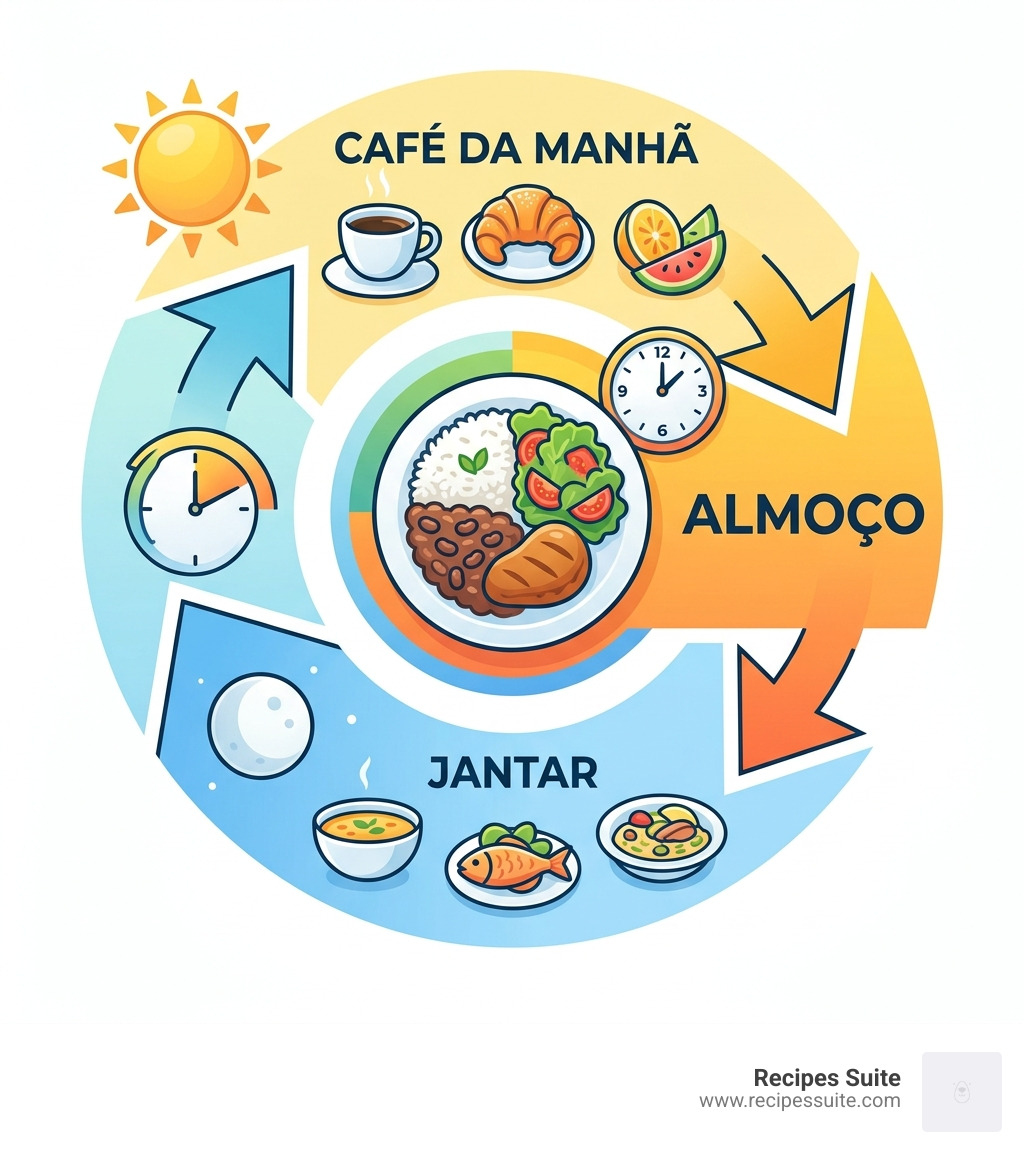
But here’s the thing: almoço is more than just a word. For millions of Brazilians and Portuguese speakers, it represents the biggest and most important meal of the day — a warm, home-cooked ritual built around rice, beans, meat, and family.
That’s very different from a quick sandwich at your desk, which is what “lunch” often means in English-speaking countries.
Whether you’re learning Portuguese, cooking Brazilian food, or just curious about the culture behind the word — understanding almoço gives you a window into how Portuguese speakers think about food and time.
What Does Almoço in English Mean?
When we look at the word almoço in english, the primary translation is always “lunch.” However, as language lovers here at Recipes Suite, we know that a single word rarely tells the whole story.
In Portuguese, “almoço” is a masculine noun. This means you will almost always see it preceded by the masculine article “o” (the) or “um” (a). For example, “O almoço está pronto” translates to “Lunch is ready.” If you are talking about more than one midday meal, the plural form is “almoços.”
According to the Tradução de almoço — Dicionário português-inglês, the word specifically denotes the meal eaten in the middle of the day.
Phonetic Guide and Pronunciation
For our English-speaking friends trying to master the Portuguese accent, the pronunciation can be a bit tricky. The phonetic guide is typically represented as /awˈmosu/.
- The “al” at the beginning sounds more like “aw” or “ow” (like in “glow”).
- The “m” is clear.
- The “o” is open.
- The “ço” (with the cedilla) sounds like a sharp “ss” followed by a soft “u” or “o” sound at the end.
If you want to dive deeper into the linguistic nuances, the almoço – Dicionário Português-Inglês WordReference.com entry provides excellent context on how the word functions as a noun in various sentence structures.

The Verb Almoçar and Its Usage
One of the coolest things about Portuguese is that it often has a specific verb for an action where English requires a phrase. In English, we usually say “to have lunch” or “to eat lunch.” In Portuguese, we have the action verb almoçar.
As noted in the Translation of almoçar – Portuguese–English dictionary, this verb means “to lunch” or “to have the midday meal.”
Here are a few ways we use it in everyday conversation:
- “Eu almoço ao meio-dia” (I have lunch at noon).
- “O que você almoçou hoje?” (What did you have for lunch today?).
- “Vamos almoçar?” (Shall we have lunch?).
It is a transitive verb, meaning you can also use it to describe what you are eating. For instance, “Ele almoça carne com arroz” (He eats meat and rice for lunch).
Regional Differences for Almoço in English Contexts
If you are traveling, keep your ears open for regional variations! There is a significant difference between how people talk about their morning and midday meals in Brazil versus Portugal.
In Brazil, the first meal of the day is “café da manhã” (morning coffee). However, in Portugal, they use the term “pequeno-almoço” (small lunch) to mean breakfast. This can be very confusing for English speakers who expect “almoço” to always mean “lunch.”
According to the English translation of ‘almoço’, while “almoço” remains the standard term for the midday meal in both countries, the existence of “pequeno-almoço” in Europe highlights how central the concept of “almoço” is to the Portuguese language—it’s the “main” meal that all other meals are measured against!
Cultural Significance and Timing of the Midday Meal
In many English-speaking countries, lunch is often a functional “break” in the middle of the workday—a quick salad or a sandwich grabbed on the go. In Portuguese-speaking cultures, especially in Brazil, almoço in english doesn’t quite capture the weight of the tradition.
The typical time for almoço is between 12:00 PM and 1:30 PM. In many cities, the pace of life actually slows down during this window. It is a social ritual. Whether it’s a family gathering at home or colleagues going out to a local restaurant, the meal is meant to be hot, substantial, and shared.
Typical Foods Served During Almoço
The “holy trinity” of the Brazilian lunch plate is rice, beans, and a protein (beef, chicken, or fish), often accompanied by farofa (toasted cassava flour) and a simple salad. In Portugal, you might find more emphasis on soups, fresh seafood, and potatoes.
| Feature | Brazil | Portugal |
|---|---|---|
| Primary Carb | White Rice | Potatoes or Rice |
| Legumes | Black or Brown Beans | Chickpeas or White Beans |
| Common Protein | Steak (Picanha), Chicken | Codfish (Bacalhau), Pork |
| Side Dish | Farofa and French Fries | Vegetable Soup (Sopa) |
Comparing Almoço in English-Speaking Countries
The contrast is sharp. If you look at the Translation of lunch – English–Portuguese dictionary, you’ll see that “lunch” in the US or UK is often a “packed lunch” (marmita) or a “quick bite.”
In the Portuguese context, eating a cold sandwich for lunch is often seen as a “lanche” (snack) rather than a proper “almoço.” A true almoço requires a plate, silverware, and a warm dish. This cultural difference is why many Brazilians living abroad find the “sandwich culture” of the US or UK one of the hardest adjustments to make!
Special Types of Almoço and Professional Settings
In the business world of Brazil and Portugal, the midday meal is a key networking tool. We don’t just sign contracts in boardrooms; we sign them over a good meal.
Almoço Comercial and Prato Feito
If you are working in a Brazilian city, you will see signs for an Almoço Comercial or an Executivo. This is a standard, low-priced workday lunch. It usually includes a substantial main dish, a side of beans and rice, and sometimes a small dessert or coffee.
Then there is the famous Prato Feito (or “PF”). This is the ultimate blue-collar hero of Brazilian cuisine. It is a pre-assembled plate that is affordable, massive, and delicious. It’s the perfect example of how the culture prioritizes a “real” meal even on a budget.
Almoço de Negócios (Business Lunch)
The almoço de negócios is a more formal affair. This is where professional etiquette meets culinary tradition. It’s common for these lunches to last 90 minutes or more. In this setting, the goal isn’t just to eat—it’s to build a relationship (networking).
Common Phrases and Idioms Involving Almoço
To truly understand almoço in english, you need to know how the word lives in the mouths of native speakers. It appears in several common idioms and daily expressions.
- “Hora do almoço”: This simply means lunchtime. It is a sacred window of time where many shops might close, and phone calls might go unanswered.
- “Pagar o almoço”: Literally “to pay for lunch,” but it’s often used when you owe someone a favor. “I’ll treat you to lunch” is a common way to say thank you.
- “Não existe almoço grátis”: This is the direct translation of the English idiom “There’s no such thing as a free lunch.” As the lunch – Dicionário Inglês-Português (Brasil) WordReference.com points out, it means everything has a price or “nada é de graça.”
Frequently Asked Questions about Almoço in English
What is the difference between almoço and pequeno-almoço?
In Brazil, almoço is lunch and café da manhã is breakfast. In Portugal, almoço is still lunch, but pequeno-almoço is the word for breakfast. If you are in Lisbon and someone asks if you’ve had your “pequeno-almoço,” they are asking if you’ve eaten your morning toast and coffee!
How do you pronounce almoço correctly in Portuguese?
The most important part is the “ç” (cedilla). It sounds like a sharp “S.” The “L” is soft, almost like a “W.” So, it sounds like aw-MOH-soo.
Is “dinner” ever used to mean lunch in English?
Yes! This is a great linguistic quirk. In some parts of the UK and the Southern United States, “dinner” can refer to the main meal of the day, even if it’s eaten at noon. In these cases, “dinner” is the equivalent of almoço, and the evening meal is called “tea” or “supper.” However, in standard modern English, “lunch” is the safest translation.
Conclusion
Understanding almoço in english is your first step toward mastering the beautiful intersection of language and food. Whether you are translating a menu, inviting a Brazilian colleague to a business meeting, or just trying to figure out why your Portuguese friend insists on a two-hour break at noon, knowing the cultural weight of this word changes everything.
At Recipes Suite, we believe that language and cooking go hand-in-hand. Food is the ultimate universal language, and knowing how to talk about it—and prepare it—opens doors to new cultures and friendships.
If you’re ready to take your skills to the next level, why not explore our free online courses? From professional cooking tips to language guides that help you navigate the kitchen in Portuguese, we have everything you need to become a true global gourmet.
Start your culinary and language journey today with Recipes Suite!

